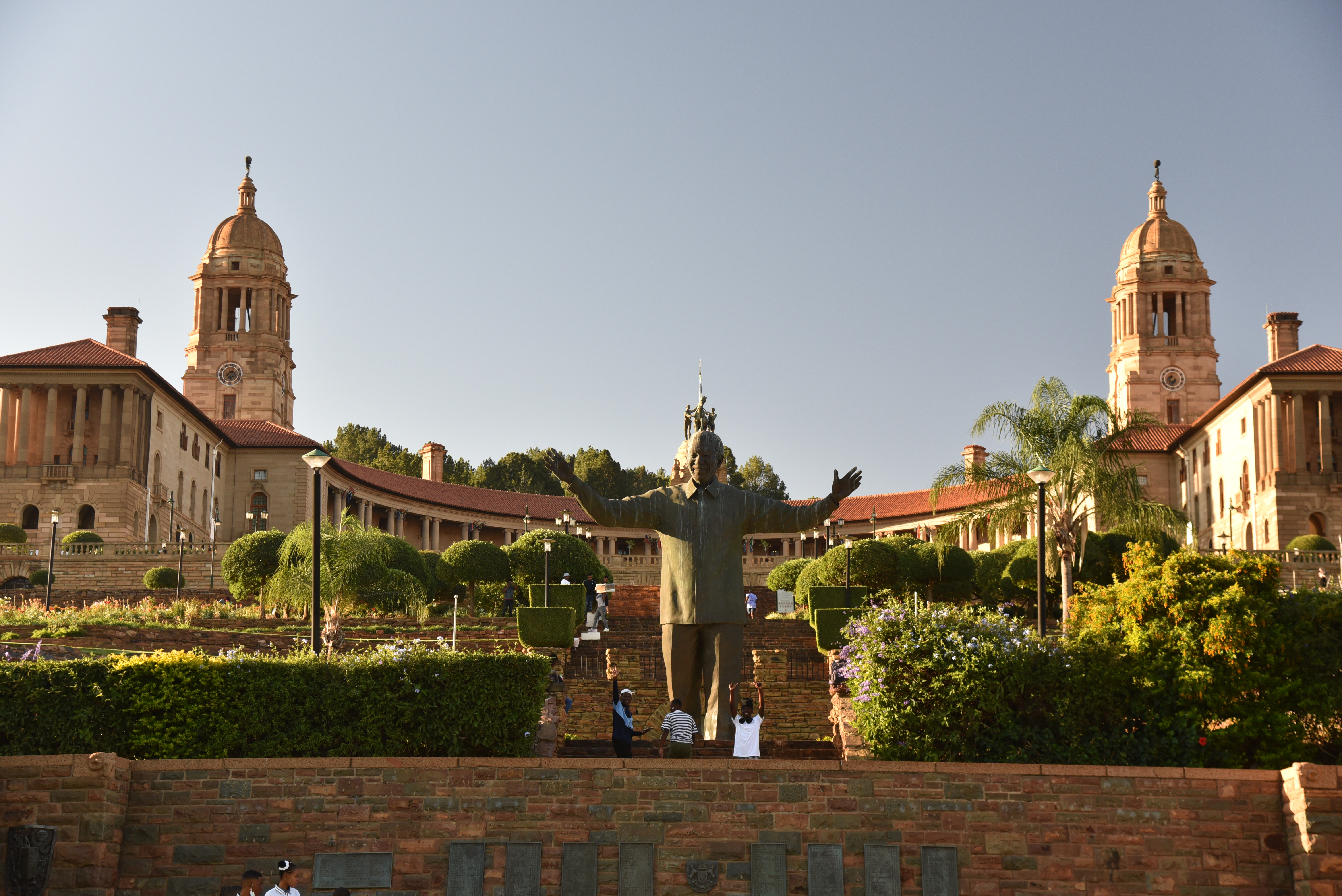
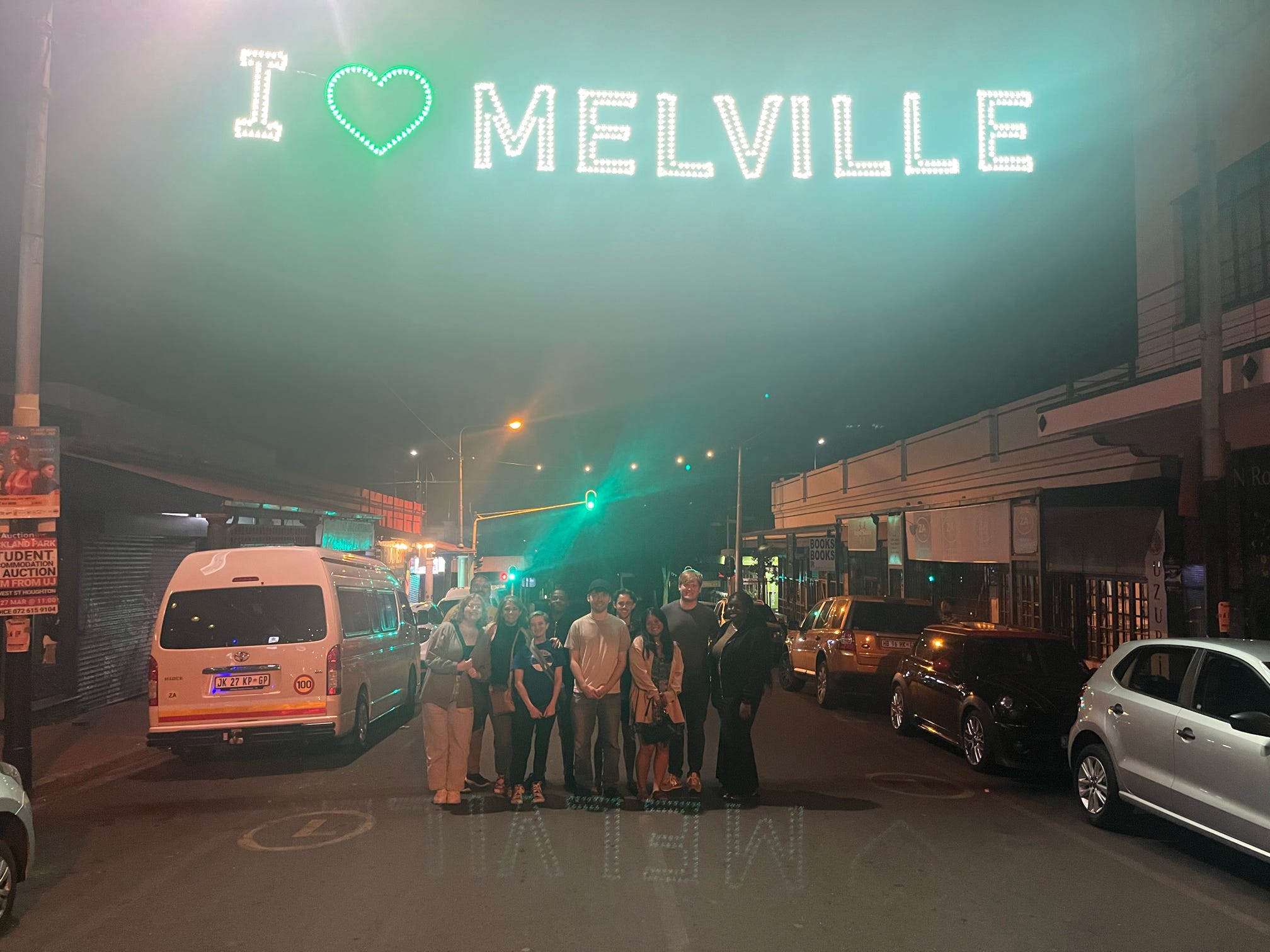
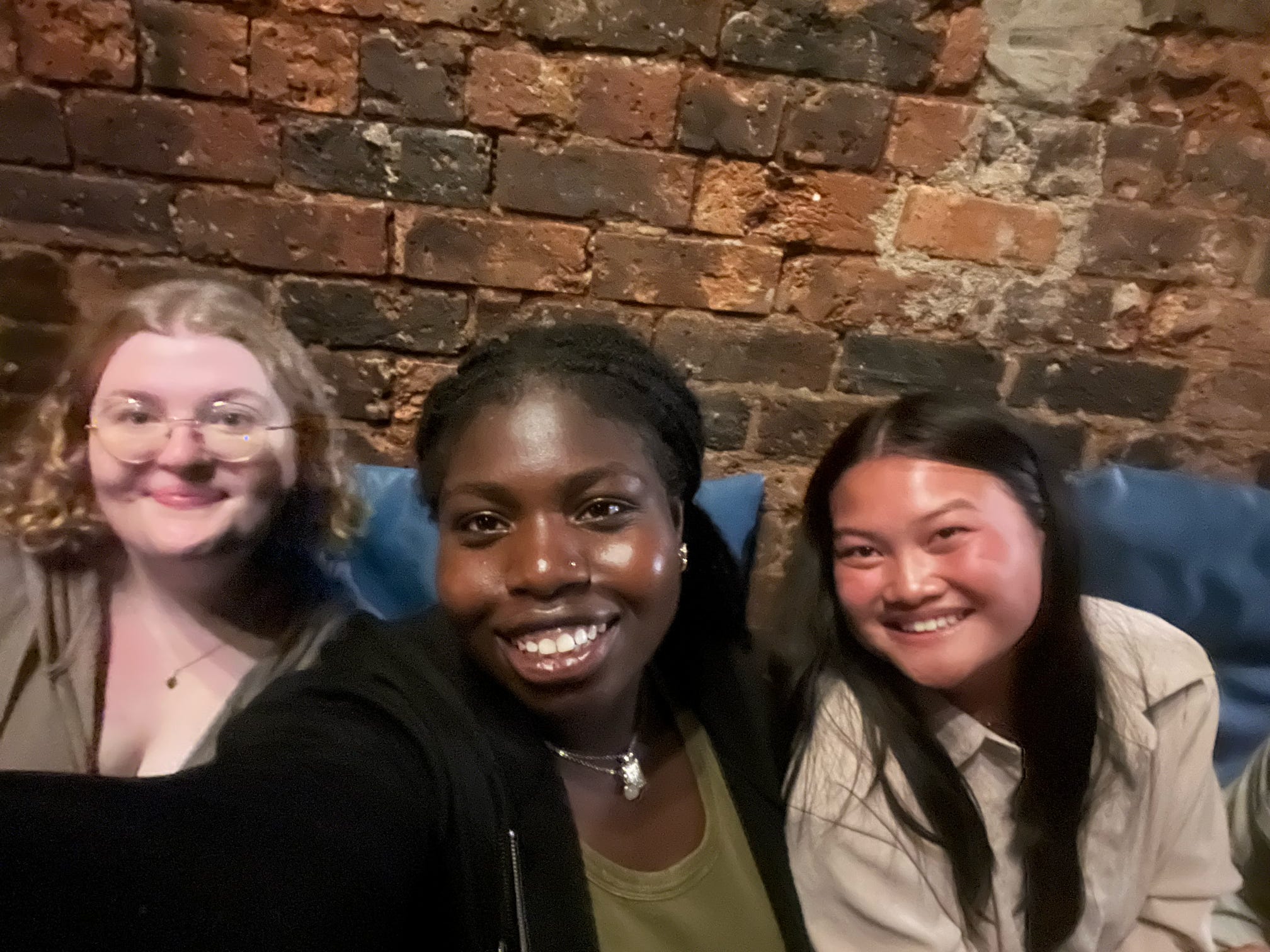
2024 group in Melville.
1 media/20240505_151640_D05297_thumb.JPEG 2025-02-21T17:10:44+00:00 Maya Valletta b68df8f5dff382f6e4992dd93579d9a77b19f3e3 1 1 plain 2025-02-21T17:10:44+00:00 Maya Valletta b68df8f5dff382f6e4992dd93579d9a77b19f3e3This page is referenced by:
-
1
media/IMG_D426B47E39E6-1.jpeg
2024-10-17T19:46:49+00:00
Movement
57
"John teasingly poked fun at me, “Maya said she ‘needs’ to see the sunset everyday so I’m moving class to after the sun sets.” As much as he was joking, there’s one hundred percent truth to that statement. It’s impossible for me to stay away from the call of the sea when I’m surrounded by the rugged, towering mountains and an open blue sky that promises a glimpse into the painted heavens when the sun dips below the horizon at the end of the day. " Maya Valletta, Pitt 2024
image_header
2025-05-23T16:47:36+00:00
As visitors to South Africa from the United States, we move freely and at speed. Our itinerary is built by faculty and in partnership with our local providers, Edu Africa.
We move with ease.We walk in a group, we travel by mini-bus, we are unencumbered by visa restriction.
South Africa welcomes us warmly and graciously as guests.
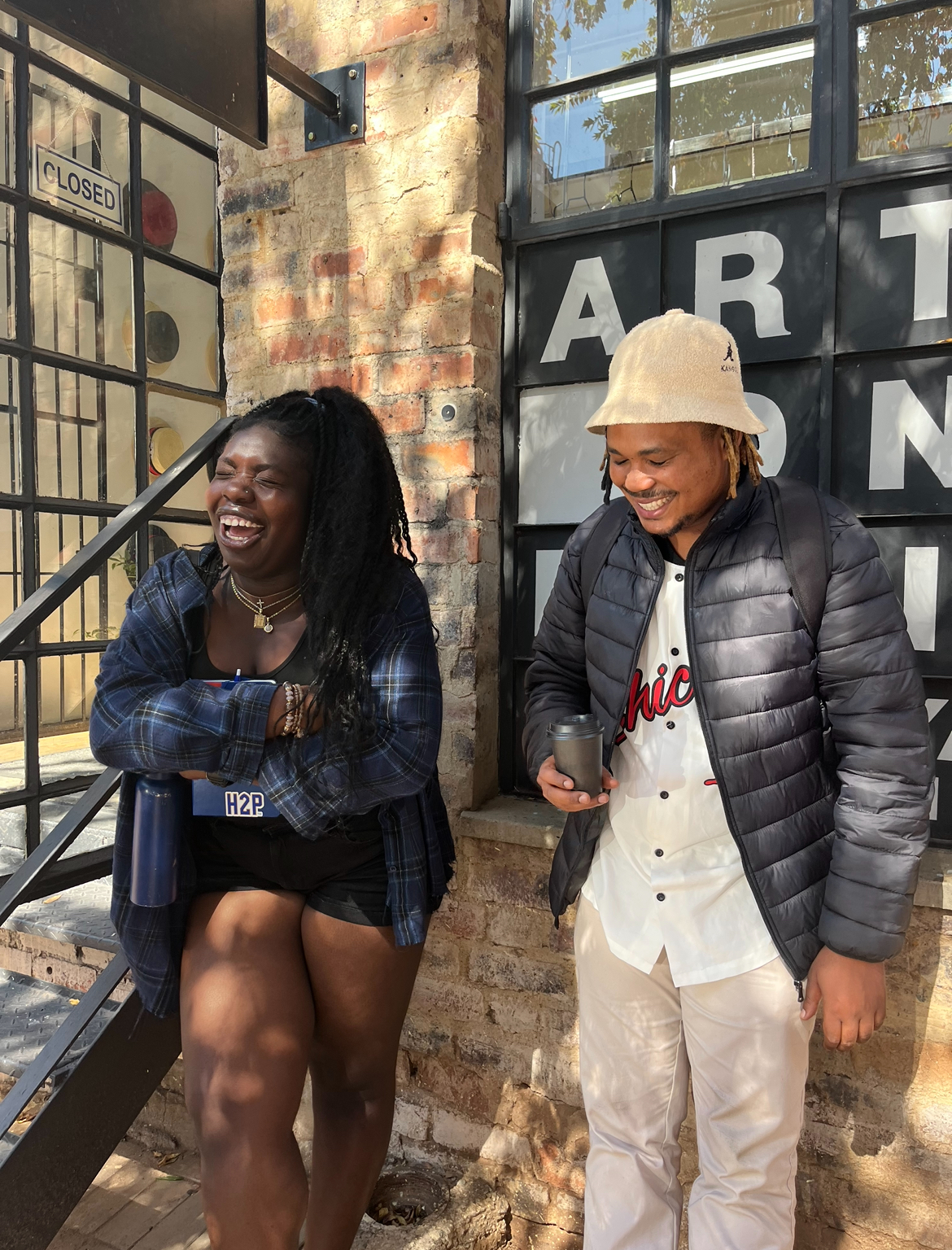
The fluidity of our movement and the richness of our explorations is not lost on us. We observe inequitable access to basic mobility, public and private transport, by class and across the legacies of apartheid. We see its residual effects on the economy and the South African population each day. We move quickly from our guest house or hotel breakfast to streets where young and old alike are hungry. We give uneaten food, from portions too large to consume in a single sitting, to those unsure of where their next meal might come from, where shelter is insecure, out on the street or in informal settlements. We move from art collectives like the Center for the Less Good Idea in downtown Johannesburg to the hip and cozy Melville, in a smooth and brief mini-bus ride. But the worlds are starkly different.
Our bodies can barely catch up with the distinctions we see in security, sanitation services and population densities.We move alongside a society in the throes of its own development, growth and emergence from a rigid and restrictive past. We acknowledge our freedoms and take care to pay attention to the distinctions in these relationships. We watch the well-heeled in fancy cars move along at high speeds on highways. In contrast, we see cows, sheep and herders, sometimes young children, walk along edges of these same thoroughfares.
We register the differences and start to consider how these distinct truths indeed live right alongside one another.
Link to full Story Map
Tumi Fadare --
The Plug is a restaurant near the entrance of the "L" in Melville. This restaurant is known for its slow food delivery, copious amounts of substances being inhaled and exhaled, and a speaker system loud enough to fill Heinz Field on any day.It is also where I experienced Black Joy in South Africa for the first time.
The dimly lit outdoor space with overcrowded seat placement gave much room for the dance floor to be highlighted in front of the DJ. This would be a scene I would come to know soon. As we sat down at the table, the smell of cigarette smoke in the air irritated my already heightened emotions. The Apartheid Museum had set a somber tone for the week, with images of the horrific acts committed by the former South African government. As conversations continued and the late arrival of my meal became more noticeable, the sounds of the tunes coming from the DJ began to dominate my mind.The beautiful blend of old tunes mixed with African beats made me wonder about the choice of music. Lauryn Hill and the Fugees' “Fu-Gee-La” was an interesting take as the “ooh la la la” blended calmly into the Amapiano background. After some reflection, I realized why. The old songs, mixed with contemporary African beats, symbolized a blend of history and present joy. Despite the increasing smoke in the room from various substances, the atmosphere filled with conversations and laughter. As my eyes scanned the room, I noticed a diverse crowd: Black, Colored, Asian, and White people all gathered in one place. Earlier in the day, I learned that The Group Areas Act of 1950 would have deemed this gathering a felony just seventy-four years ago.My stomach still grumbling in anger, I decided to immerse myself in the unique scene. Pushing our way through the crowd and gliding to the dance floor with Maya was the best decision of that night. As we made our way to the dance floor, the joy of the room began to overtake me. Now I stood on the shiny dance floor with the music from the DJ’s equipment blasting louder than ever before. The African beats mixed with the 90’s tunes created an infectious energy.
As I swayed my body side to side on the tan tiles within this garage-turned-outdoor restaurant, I realized that just a few years back, it would have been illegal to dance with Maya and have dinner with such a racially diverse group. As more people joined the dance floor, the vibrant atmosphere of songs that the country once wished everyone could dance to before 1994 was on full display. The choreographed dance moves seemed to be a favorite among the South African locals. Left foot... Right foot... Hip twist... Turn.
I struggled as one of the dancing locals with a mojito in his hand tried to teach me the dance moves. Taking my seat soon after, I watched in joy as the dance floor filled. The sound of laughter accompanied every pounding step of the dance.
Molly Holz--
Media Editing, Layout and Design (lead) by Maya Valletta, Pitt 2025.
Text by Jennifer Keating [unless otherwise noted] Pitt Teaching Professor, Department of English.
Content Development and Media Editing (assistance) by Derek Graf, Pitt 2026.