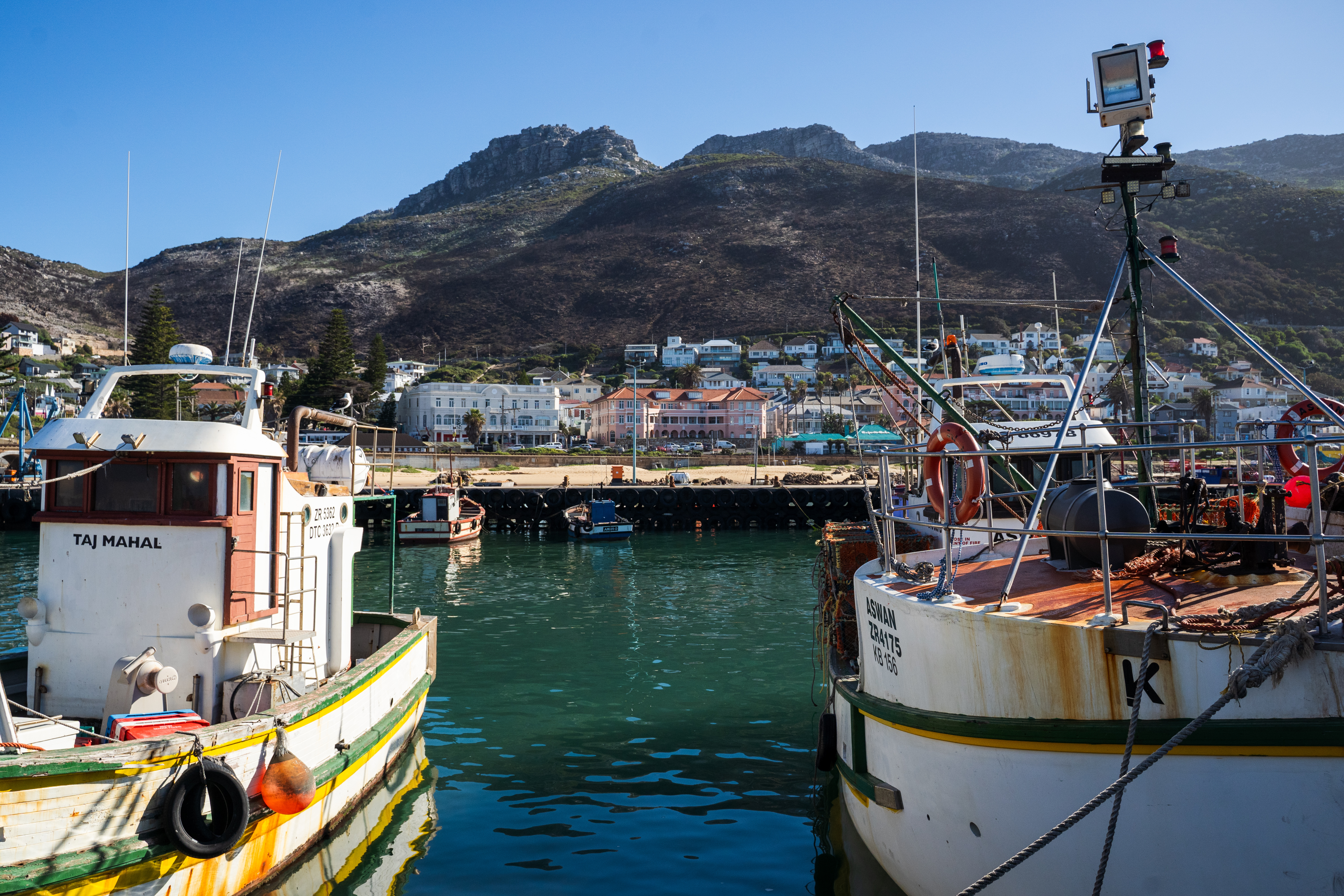
Kalk Bay boats.
1 media/DSC07012 3_thumb.JPG 2024-10-26T02:56:45+00:00 Maya Valletta b68df8f5dff382f6e4992dd93579d9a77b19f3e3 1 1 plain 2024-10-26T02:56:45+00:00 20240528 040714-0400 20240528 040714-0400 Maya Valletta b68df8f5dff382f6e4992dd93579d9a77b19f3e3This page is referenced by:
-
1
media/IMG_2286.jpg
media/IMG_2286.jpg
2024-10-17T19:47:48+00:00
Connectivity
42
I knew there were 12 official languages so I was wondering how that would manifest both in government and everyday life." Alex Gehman, Pitt 2025
image_header
2025-03-28T15:22:56+00:00
South Africa has a long history of colonialism, apartheid and other cultural, linguistic, political and faith distinctions that separate a deeply diverse and dynamic population. This context can distract from the meaningful connections that are actually as numerous as the seeming divisions. Varied landscapes, biological diversity, distinctions across how groups worship, craft relationships to the land and build rituals around food and celebrations offer seemingly innumerable ways to meaningfully connect, as strangers and as old friends.
South Africa boasts a vibrant and multifaceted relationship to linguistic diversity in its 12 official languages: Zulu, Xhosa, Afrikaans, Pedi, Tswana, English, Sotho, Tsonga, Swati, Venda, Ndebele and South African Sign. In the distant and recent past, language diversity has been a source of considerable consternation - in the histories of oppressive legislation associated with the various European colonial powers in the Dutch, the French and the British, the legacies of the National Party, and limited access to formal education in indigenous languages. In contrast, more recent efforts like the Phaphama Initiatives in Soweto breath life into building understanding through language acquisition and exchange. In programs like Transfer of African Language Knowledge (TALK), interventions build opportunities to connect in elementary and advanced study of African Language. TALK "uses African language and intercultural learning as a vehicle through which to build effective workplace and personal relationships based on mutual understanding, respect and trust." Such initiatives lay foundations for tolerance and meaningful exchange with an eye towards building robust communities and democratic practices (https://phaphama.org/programme/transfer-of-african-language-knowledge-talk/).
(Video of some of us saying names (not me tho))
As we traveled and saw social and economic inequity reminiscent of divisions that we see at home in the United States, were were continually challenged to also embrace and take note of joy, of resilience and of celebration of meaningful connections. To hear languages spoken across such an expanse of language systems, to see chatter break into song and laughter and to share meals amongst strangers who became fast friends, was to witness change underfoot and to remember not to take ourselves too seriously. To lean in to the possibility to get to know one another and inadvertently, to learn a bit about ourselves too.“The pre-apartheid era does risk becoming mythologized as an era of total harmony, preventing us from learning from and celebrating the challenges of how marginalized people confronted inequality and injustice within their own communities. However, it is important to recognize that there was a very deliberate process of community mobilization in District Six that forged ideas that served to challenge the foundations of apartheid. Organizations in District Six, including the Non European Unity Movement, mobilized against the idea of race defining people, in response to new radical ideas coming from new parts of the world …. One of the legacies that District Six bequeaths to the nation, then, is this idea of nonracialism.” Valmont Layne
The District Six Museum: An Ordinary People’s Place
The Public Historian February 2008
In democratic, post-apartheid South Africa, students witness and celebrate learning what it means to live, work and explore in a society dominated by youth. Democracy in South Africa is young. Vestiges of division are old. Economic development, entrepreneurship and celebrations of local artisanship, craft and relationships to the dramatic landscape appear at every turn, winding the old and the received with the new. The new is brightly reinterpreted and given new meaning as it combines with elements of the past. This is a landscape and a society that allows strangers to connect, and friends to deeply relish their shared relationships to place and to one another. This is an environment where contradictions and multiple truths have little option but to exist, indeed to live, alongside one another.
As we negotiate relationships to conceptions of a witness, we ask students, do you remember your Zulu name from an afternoon of eating with your and hands, and deep, unbridled conversation with our hosts at Phaphama Initiatives in Soweto? Can you still feel the salty remnants and the sand between your toes as you now remember sunset at Camps Bay?
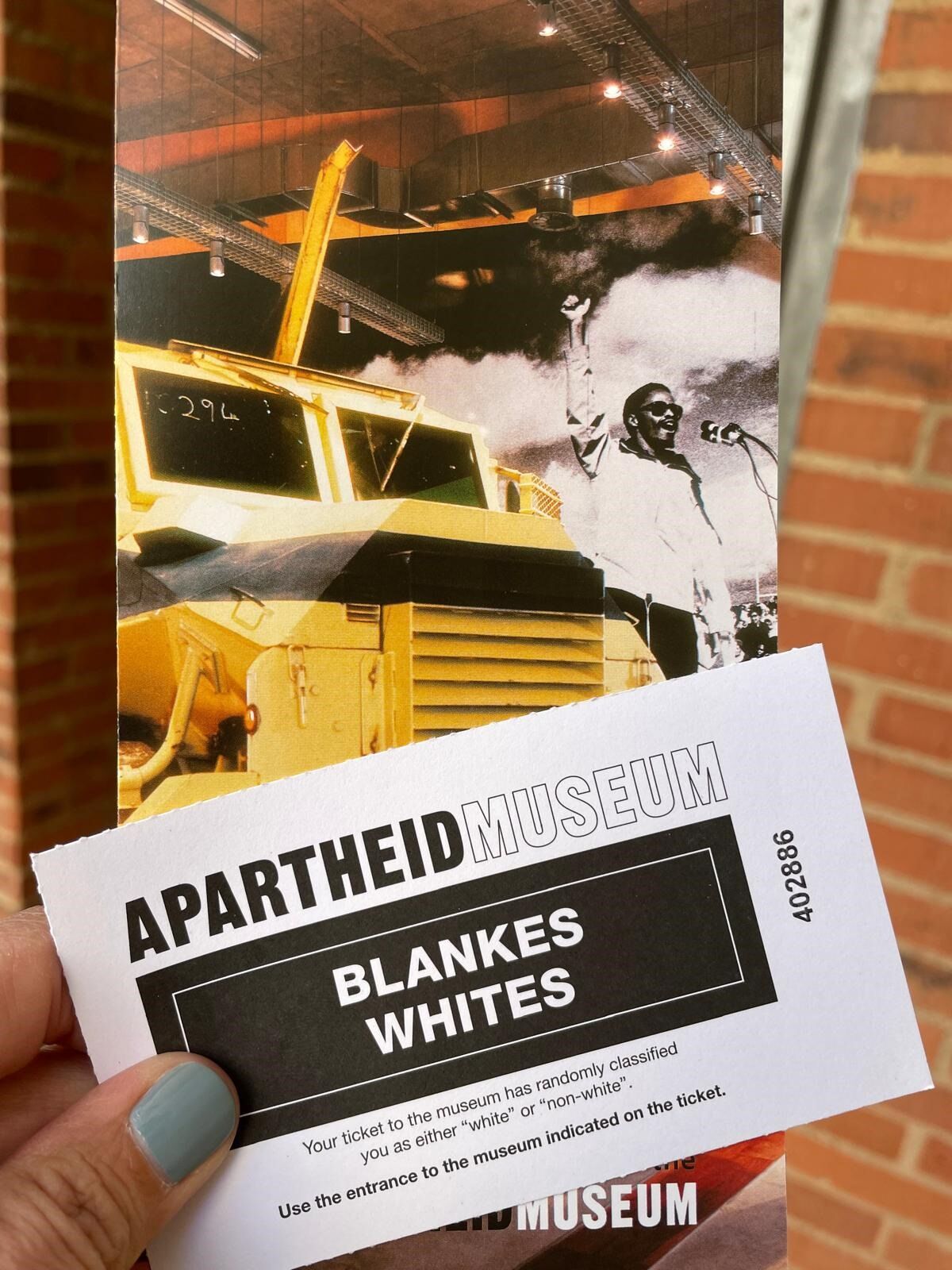
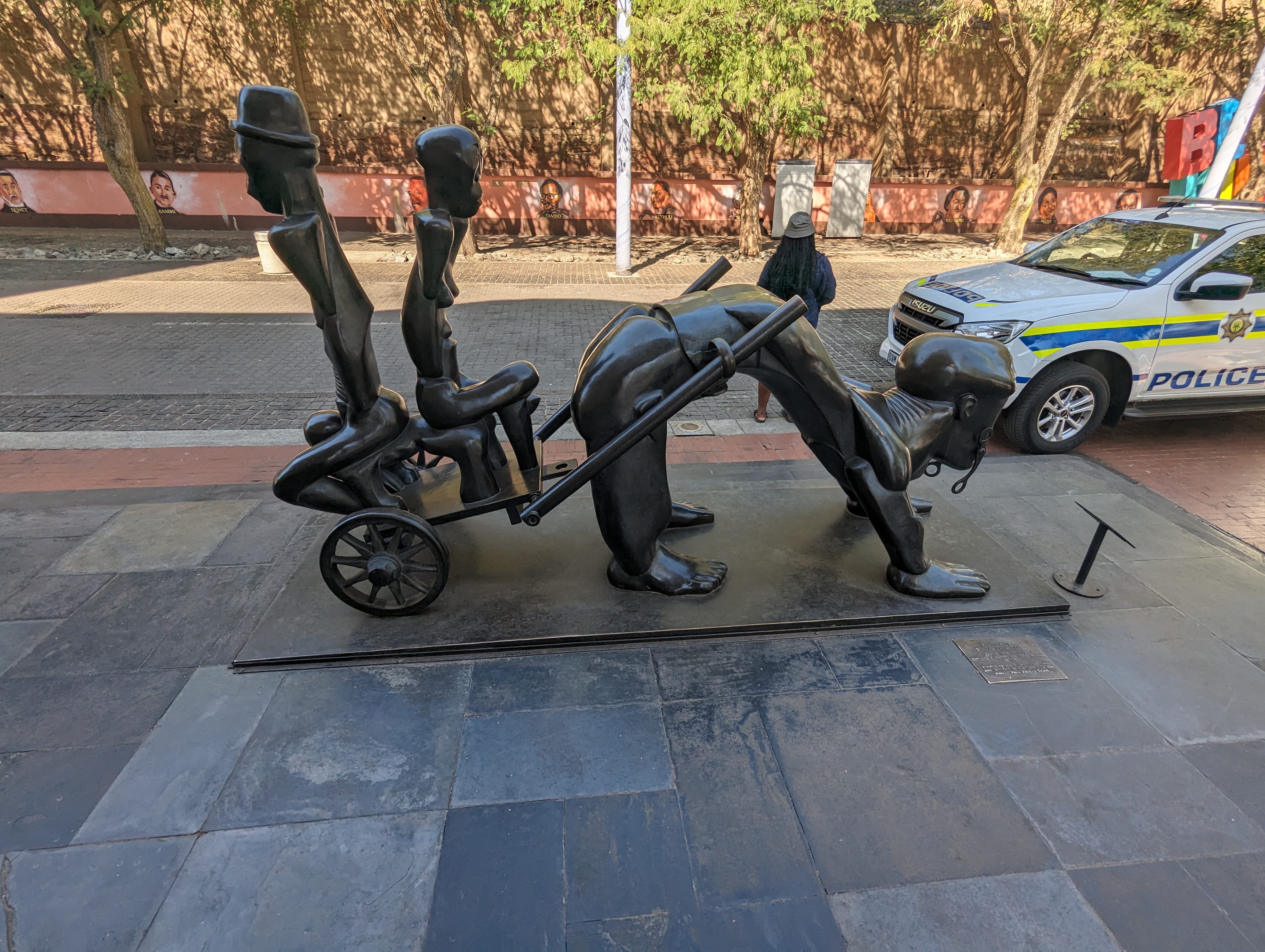
What do you recall of prisoners suffering at the Old Fort? Documentation of violence, trauma and injustice at the Hector Pieterson Memorial, Robben Island and the Apartheid Museum?
What do you remember when you think of songs that we heard while dancing with the Phaphama Collective? The buskers at the V&A Waterfront? Or singing along with our Edu Africa guide and friend, Jonathan, and our drivers, Mr. Lebo and Mr. Alfonso?
V&A SOUND FILE OF BUSKERS
How did you manage the din from seagulls overrunning Robben Island as you took a break from the tour bus for a much needed cup of hot coffee?
How did you manage the seasickness on your return ferry from Robben Island?
Did you dip into the frigid water in the bathing pools at Kalk Bay?
Did you regret its chilliness even for a moment as you giggled with your classmates, sliding on the seaweed filled bottom of the pools,
as the waves washed in and out, and reminded you that the ocean is in charge?
.JPG)