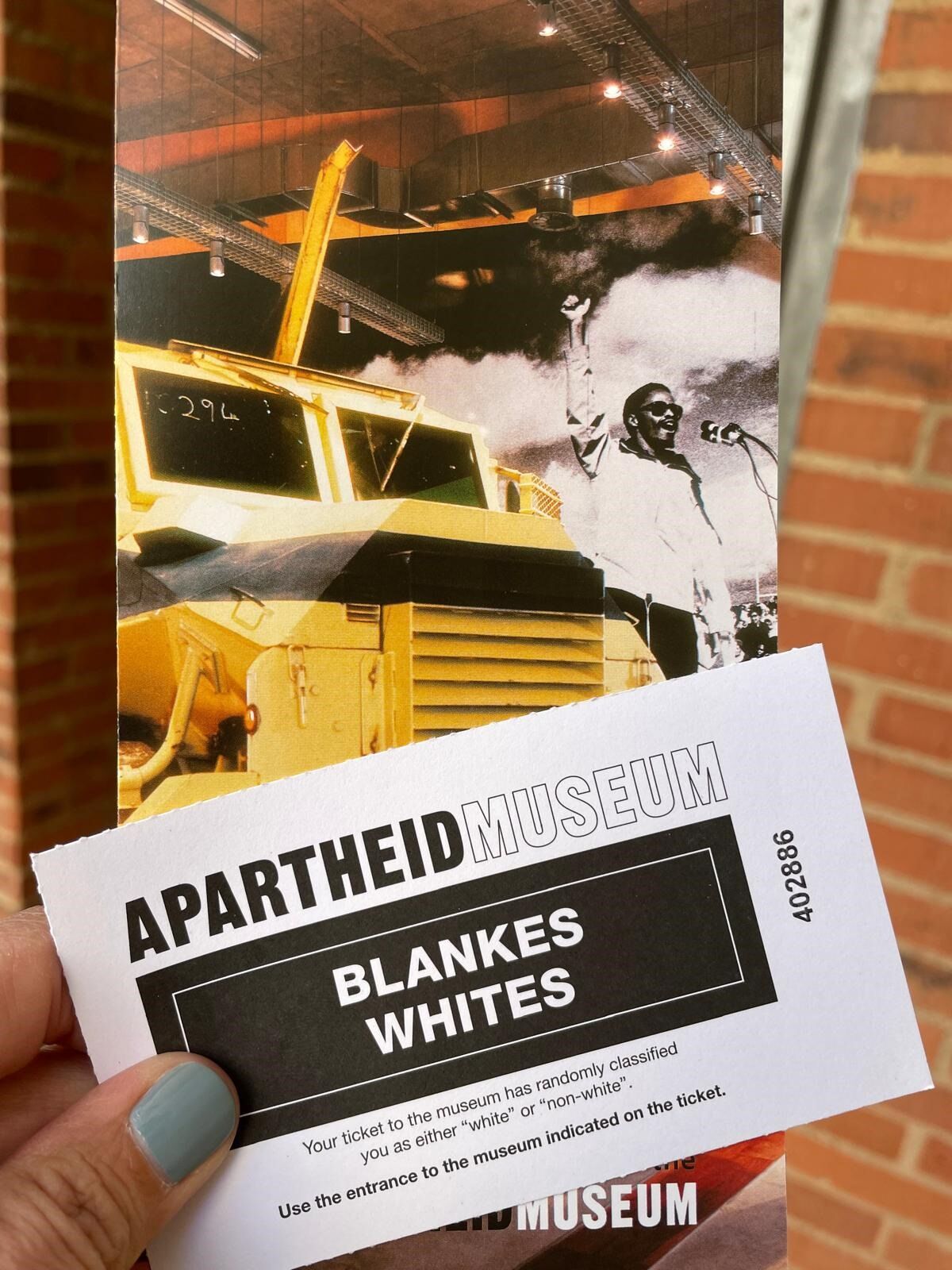
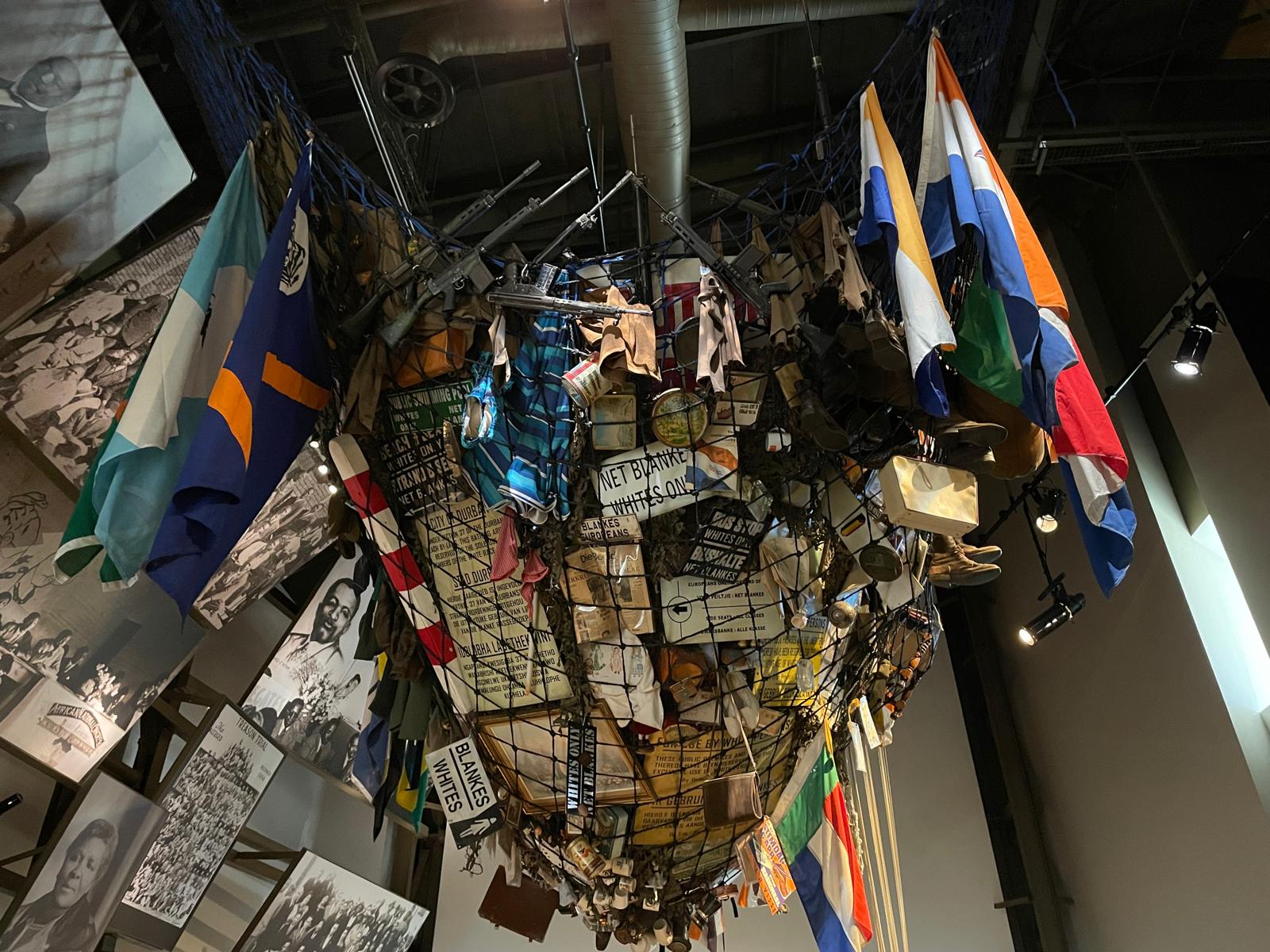
Apartheid Museum Ticket.
1 media/5f02badf-f9d8-4bb2-83a8-c28675aa2ca5_thumb.jpg 2024-10-17T20:07:30+00:00 d0aa1789415ed2a4efd4456130182fcffadf169a 1 1 plain 2024-10-17T20:07:30+00:00 d0aa1789415ed2a4efd4456130182fcffadf169aThis page is referenced by:
-
1
media/IMG_2286.jpg
media/IMG_2286.jpg
2024-10-17T19:47:48+00:00
Connectivity
65
"I knew there were 12 official languages so I was wondering how that would manifest both in government and everyday life." Alex Gehman, Pitt 2025
image_header
2025-05-23T16:23:49+00:00
South Africa has a long history of colonialism, apartheid and other cultural, linguistic, political and faith distinctions that separate a deeply diverse and dynamic population. This context can distract from the meaningful connections that are actually as numerous as the seeming divisions. Varied landscapes, biological diversity, distinctions across how groups worship, craft relationships to the land and build rituals around food and celebrations offer seemingly innumerable ways to meaningfully connect, as strangers and as old friends.
South Africa boasts a vibrant and multifaceted relationship to linguistic diversity in its 12 official languages: Zulu, Xhosa, Afrikaans, Pedi, Tswana, English, Sotho, Tsonga, Swati, Venda, Ndebele and South African Sign. In the distant and recent past, language diversity has been a source of considerable consternation - in the histories of oppressive legislation associated with the various European colonial powers in the Dutch, the French and the British, the legacies of the National Party, and limited access to formal education in indigenous languages. In contrast, more recent efforts like the Phaphama Initiatives in Soweto breath life into building understanding through language acquisition and exchange. In programs like Transfer of African Language Knowledge (TALK), interventions build opportunities to connect in elementary and advanced study of African Language. TALK "uses African language and intercultural learning as a vehicle through which to build effective workplace and personal relationships based on mutual understanding, respect and trust." Such initiatives lay foundations for tolerance and meaningful exchange with an eye towards building robust communities and democratic practices.
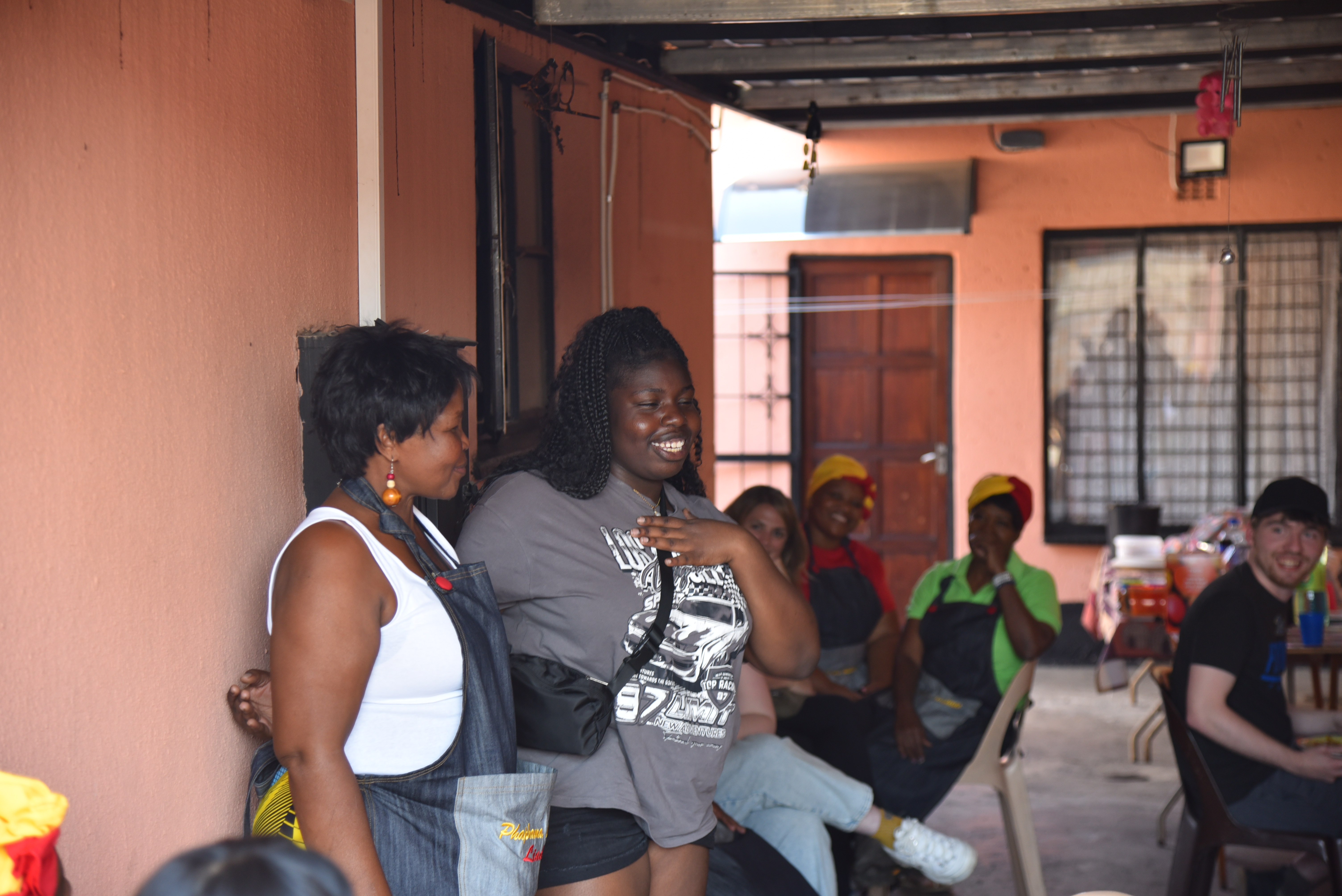
Soweto Cultural Exchange - Introducing ourselves in South African languages.
As we traveled and saw social and economic inequity reminiscent of divisions that we see at home in the United States, were were continually challenged to also embrace and take note of joy, of resilience and of celebration of meaningful connections. To hear languages spoken across such an expanse of language systems, to see chatter break into song and laughter and to share meals amongst strangers who became fast friends, was to witness change underfoot and to remember not to take ourselves too seriously. To lean in to the possibility to get to know one another and inadvertently, to learn a bit about ourselves too.
In democratic, post-apartheid South Africa, students witness and celebrate learning what it means to live, work and explore in a society dominated by youth. Democracy in South Africa is young. Vestiges of division are old. Economic development, entrepreneurship and celebrations of local artisanship, craft and relationships to the dramatic landscape appear at every turn, winding the old and the received with the new. The new is brightly reinterpreted and given new meaning as it combines with elements of the past. This is a landscape and a society that allows strangers to connect, and friends to deeply relish their shared relationships to place and to one another. This is an environment where contradictions and multiple truths have little option but to exist, indeed to live, alongside one another.“The pre-apartheid era does risk becoming mythologized as an era of total harmony, preventing us from learning from and celebrating the challenges of how marginalized people confronted inequality and injustice within their own communities. However, it is important to recognize that there was a very deliberate process of community mobilization in District Six that forged ideas that served to challenge the foundations of apartheid. Organizations in District Six, including the Non European Unity Movement, mobilized against the idea of race defining people, in response to new radical ideas coming from new parts of the world …. One of the legacies that District Six bequeaths to the nation, then, is this idea of nonracialism.” Valmont Layne
The District Six Museum: An Ordinary People’s Place
The Public Historian February 2008
Alex Gehman --
Link to full Story Map
As we negotiate relationships to conceptions of a witness, we ask students, do you remember your Zulu name from an afternoon of eating with your and hands, and deep, unbridled conversation with our hosts at Phaphama Initiatives in Soweto? Can you still feel the salty remnants and the sand between your toes as you now remember sunset at Camps Bay?
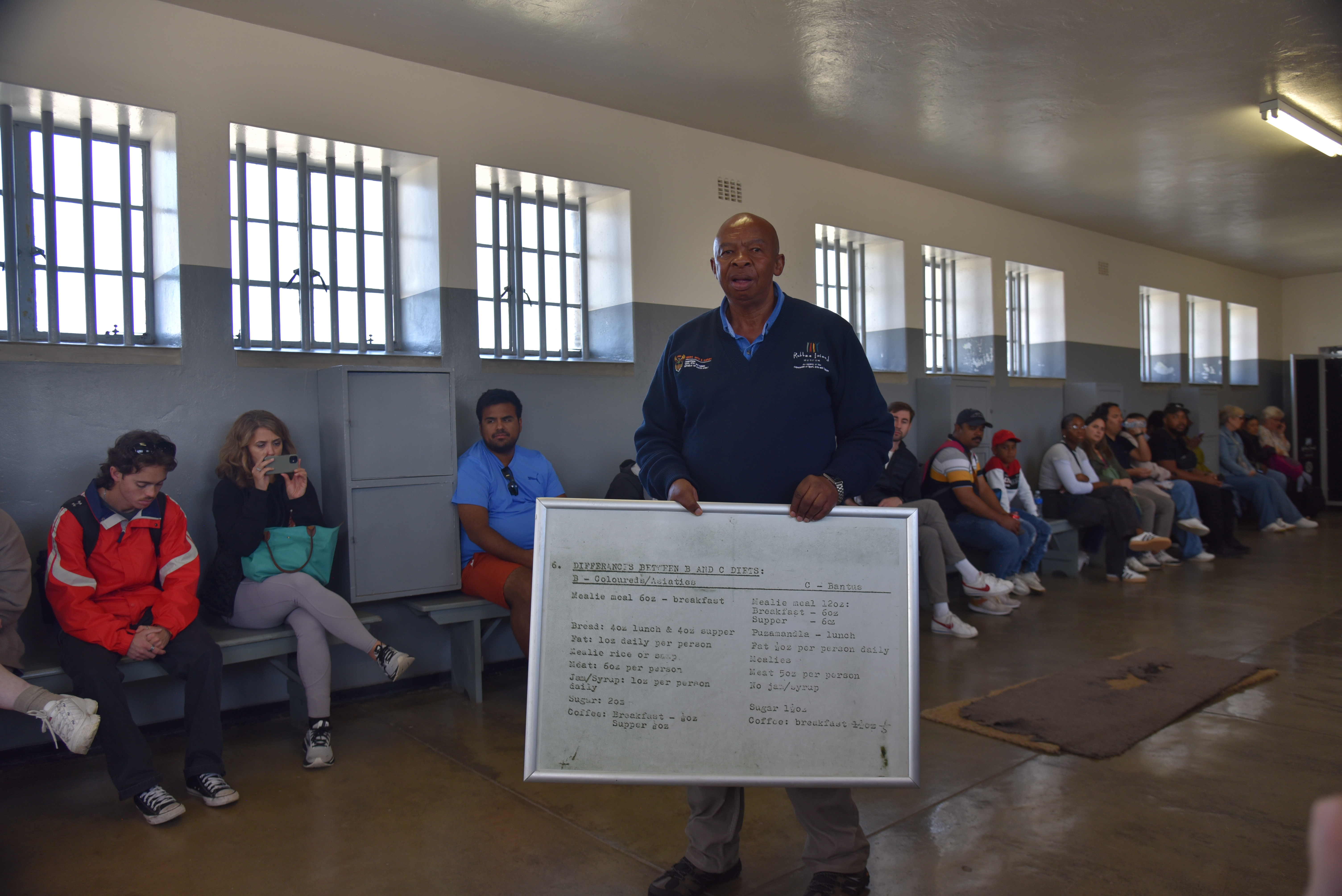
What do you recall of prisoners suffering at the Old Fort? Documentation of violence, trauma and injustice at the Hector Pieterson Memorial, Robben Island and the Apartheid Museum?
What do you remember when you think of songs that we heard while dancing with the Phaphama Collective? The buskers at the V&A Waterfront? Or singing along with our Edu Africa guide and friend, Jonathan, and our drivers, Mr. Lebo and Mr. Alfonzo?
How did you manage the din from seagulls overrunning Robben Island as you took a break from the tour bus for a much needed cup of hot coffee?
How did you manage the seasickness on your return ferry from Robben Island?
Did you dip into the frigid water in the bathing pools at Kalk Bay?
Did you regret its chilliness even for a moment as you giggled with your classmates, sliding on the seaweed filled bottom of the pools,
as the waves washed in and out, and reminded you that the ocean is in charge?
Media Editing, Layout and Design (lead) by Maya Valletta, Pitt 2025.
Text by Jennifer Keating [unless otherwise noted] Pitt Teaching Professor, Department of English.
Content Development and Media Editing (assistance) by Derek Graf, Pitt 2026. -
1
media/Robben Island Entrance.jpg
2024-10-17T19:47:11+00:00
Restriction
27
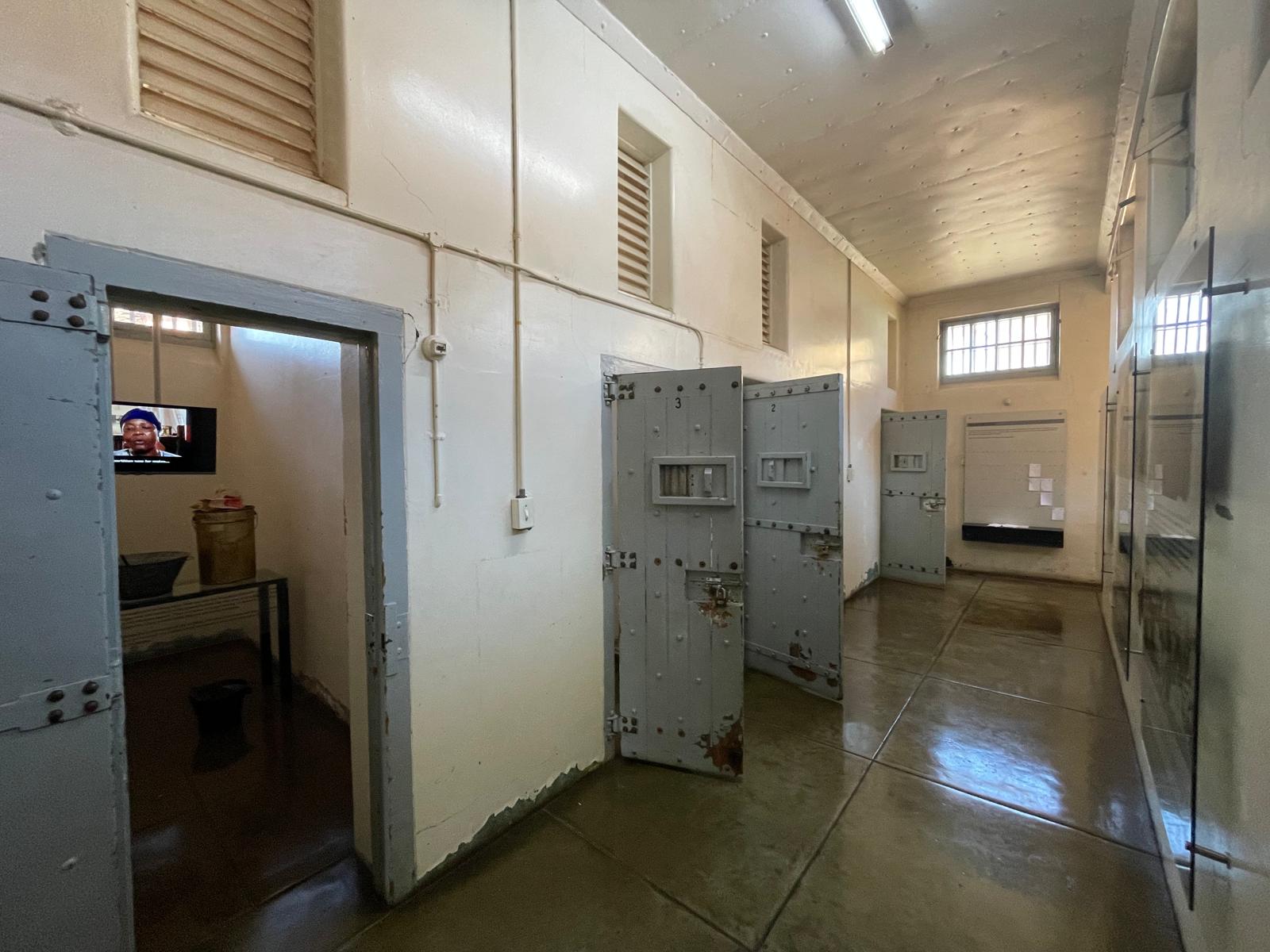
"You make the decision to stop the door from closing fully, to let just a little more sunlight in. If only it was that easy for everyone who stood behind this door. If only they could stop the slamming door with a foot and kindly remind the prison guard that they were innocent, and a tourist ..." Derek Graf, Pitt 2026
image_header
2025-02-27T16:59:26+00:00
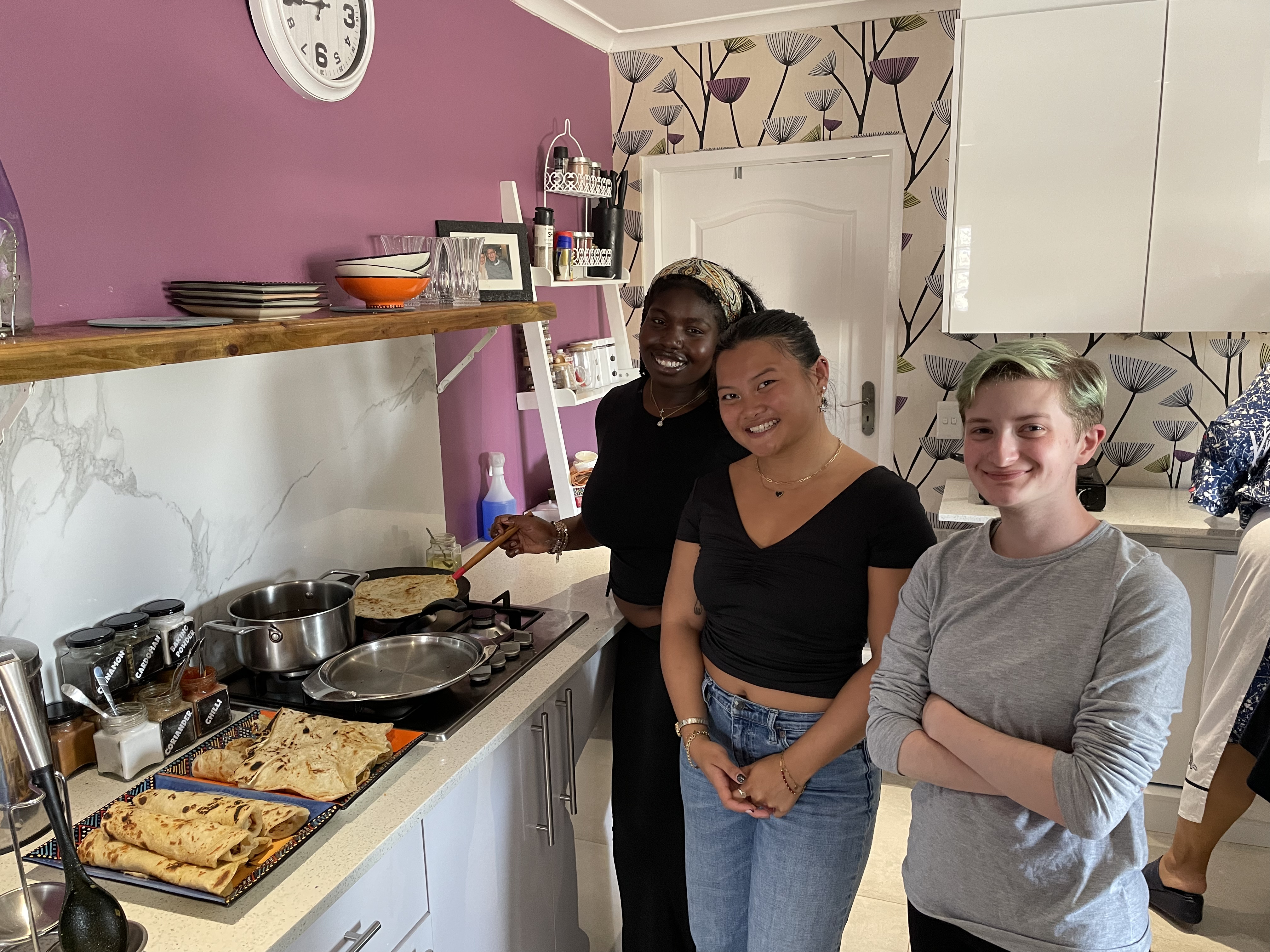
To witness the ills of our times is perhaps a feature of our civic duty that Ross Wilson describes in Museums and the Act of Witnessing. But through the gift of travel, to build meaningful relationships with individuals who were once strangers, we also witness moves from stricture to softness, separations to connections and the prospect of shared learning. To cook together, carefully measuring flour, water, salt and kneading dough for samosa, roti, we watch the alchemy of creation. Making something new out of seemingly static components. The chemical changes in the respective doughs offer a foundation to create something new, something to share out of adherence to tradition, to a recipe, passed from one generation of cooks to the next.
In travel and in a willingness to reach out, we find new ways to laugh together, to marvel at the beautiful and to face the perils of our past with courage.
Could travel be another form of civic engagement as well?
What strictures do we need to respect in order to earnestly listen and learn through the narratives of others? How do we really internalize the warning signs endemic to autocracy, infringements on human rights, limits on individual expression or basic freedoms?
In the Pitt in South Africa program, students undertake the challenge to move out of their comfort zone. They choose to go somewhere new, to write something novel, to compose a new configuration of a narrative deeply connected to place that allows us to document the difficult, the traumatic and the stark. While we also lean in to the joy, to connectivity and witness what it means to grow alongside one another, we also face the shortcomings of our pasts with care, with concern and with critique.
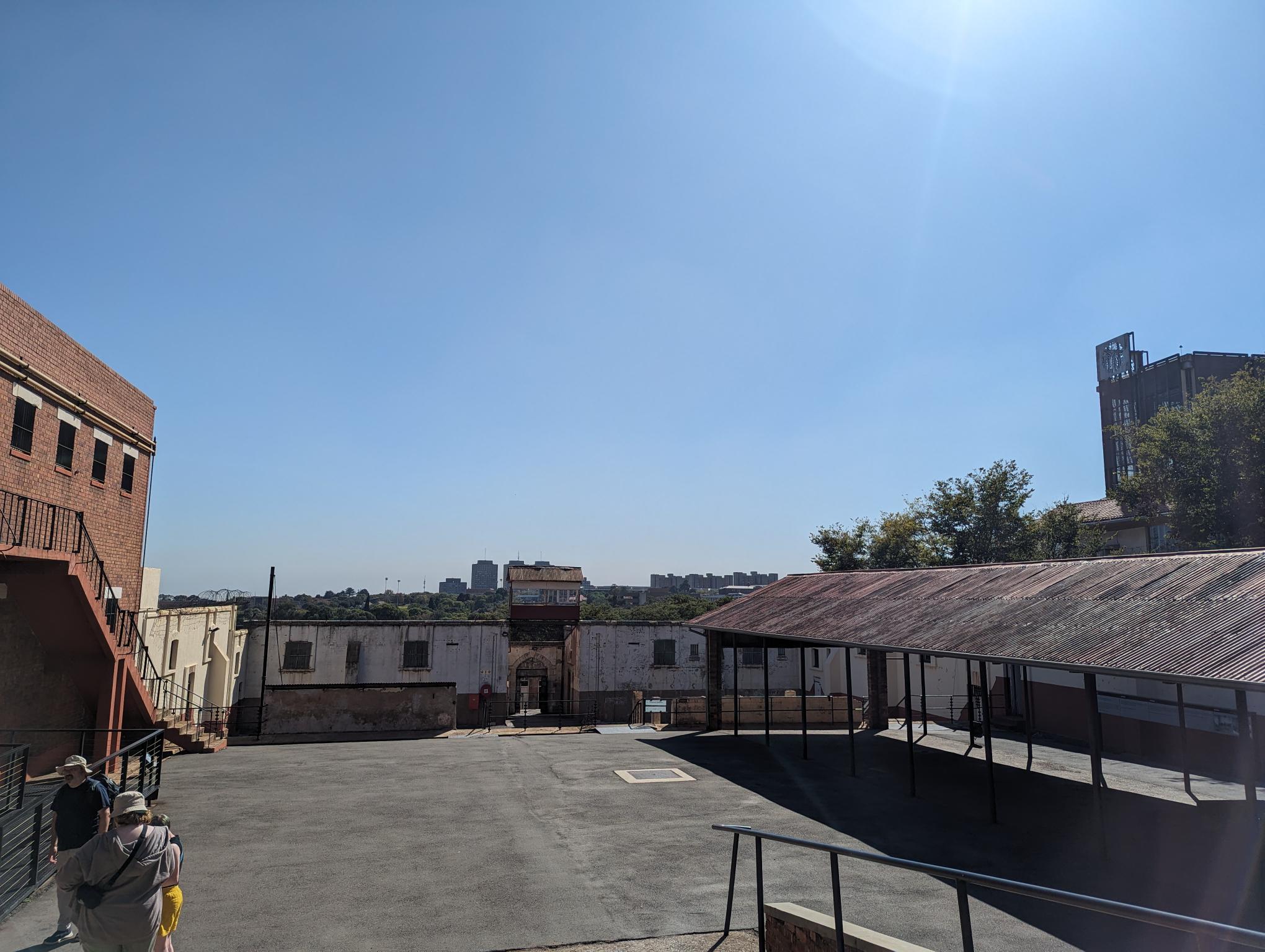
As we visit the Old Fort, the Castle of Good Hope, Robben Island Prison and pass the notorious Johannesburg Central Police Station, winding about Cape Town and Johannesburg, we are haunted by restriction. The legacies of the Group Areas Act, forced removals in District Six and relocation to the Cape Flats, the narrow survival of the Bo Kaap, in the wake of urban renewal and the cruelty of the apartheid system. Everywhere we look, we see hauntings of restriction. We see vestiges of colonial oppression in school systems, language systems, systemic violence in policing and limits in economic mobility as systems have enshrine these historic injustices. We learn, in intimate detail, the violence of imprisonment. We hear of the cruelty of misogyny, of gender-based violence. We see corrective efforts in the Constitutional Court, as it stands prominent and strong, literally sharing grounds and haunted by the shadows of the Old Fort.
As we learn, we reflect and respect the particularities of our journey. We are forced to consider the echoes in these scenes, these legacies, at home too. Restriction, stricture, vestiges of oppression and struggles for freedom are living narratives at home too. Whether in archival holding, museum displays or in the objects of every day, we find that travel helps us to see new significance in our surroundings, a newfound sensitivity to what could easily be swept into broad historic narratives. What could easily be missed details in the midst of the seemingly ordinary, the unquestioned features of our everyday.
This is messy emotional and analytical work. But the narratives that we mine, that we compose and that we collect afford us the opportunity to gainfully consider where our lives meet and where they depart. We can respect stricture, we can acknowledge restriction but it also sensitizes us to the moments of connection, of movement, of momentum and change. We see that too. And as we try to find meaning in the difficult and the gorgeous that are oftentimes in the present circumstances, lined up, side-by-side, we find productive contrast in facing the perilous with courage and a willingness to simply listen, watch and perhaps, learn something new.
SO WE CAN EITHER DO SOMETHING LIKE THIS OR THE LAYOUT BELOW. I FIND THAT THE PICTUURES DO NOT WANT TO GET CLOSER TOGETHER. MAYBE ONE OF YOU CAN TRY FIDDLING WITH IT BUT I THINK THIS MIGHT BE BEST.
Molly Holz --
While flipping through the pages of the printed works, I was particularly drawn to the photographs taken by George Hallett of prominent Black people throughout throughout African and the African Diaspora from the 1980s and 2000s. Two portraits that stuck out to me were [those taken] of Zoe Wicomb and Chinua Achebe.
The first photograph captures Zoe Wicomb on the streets of Paris in 1995. She casually stands in front of movie poster for the film “The Story of Qui Ju.” It shows a woman swaddled in a headscarf looking off into the distance mysteriously. Mirroring this image, Wicomb stoically stands to the
right of the poster and stares into the lens of the camera. She wears a fashionable trench coat and a pin of a swan, paired with a set of dangly earrings. As she slightly leans on the board, her balance is off center. Yet she does not show this shift. Instead, she proudly stands with her hair
blowing in the wind.
Some may read the image of Wicomb as smug. I view it as empowering.
She is confident.
Upon further research, [it is clear] Wicomb mimics the movie poster beyond physical appearance, but [moves into] lore. According to a summary of the movie, after Qui Ju defends her husband after a wrongdoing from the local chief, she leaves in search of justice from a higher political order. She spends the entirety of the film in search of justice for not only her and her husband, but for her community.
A parallel in this plot can directly be drawn Wicomb's [own work]. As witnessed on our last soundwalk, as well as a physical copy being provided by Ben during this latest visit, Wicomb’s work “You Can’t Get Lost in Cape Town” is a testimony to the experience of being a Coloured woman in South Africa under the apartheid state, and what it means to navigate not only the governmental structures, but day-to-day situations.
You can’t help but wonder the intentionality of the positionality of Wicomb, standing next to the poster of Qui Ju.
The latter portrait that struck me was of “Chinua Achebe at Madiba’s Cell, Robben Island, 2002”. In the photograph Achebe is being pushed in a wheelchair by another man and is surrounded by a group of young men who all stand behind him, distraught. When I viewed this photograph in the classroom in Woodstock, as Ben eagerly talked about his research, I felt the room go quiet as I looked at the picture. I could hear the solitude and mourning across the page.
Having the privilege of visiting Robben Island and also seeing Nelson Mandela’s cell recently allowed me to visualize physically being in this space. However, I can never imagine the pain and range of emotions that was truly felt in this brief moment that was captured. This is a broad
question, so please excuse the vastness. But I am curious about the support that people of color under the apartheid state in South Africa received from those across the continent of Africa? As Achebe, a Nigerian novelist, who in this photo visited South Africa [demonstrates solidarity], I am curious as to what resistance against apartheid looked like in the broader African context, as well as internationally in Western territories?